
You leave for a week. Maybe it's March Break with the kids. Maybe you're opening the cottage for the first time since Thanksgiving. Either way, your house sits dark. No lights flip on at 7 PM. No car moves in the driveway. The flyers pile up by the front door. And someone driving past your street notices.
That's how most break-ins start. Not with a sophisticated plan. With a house that looks empty and nobody watching.
Spring is the start of it. From now through October, Ontario homeowners leave their properties vacant more than any other time of year. Long weekends, family vacations, summer road trips, cottage season. Your home could sit empty for a few days or a few weeks. And while you're gone, it's not just burglars you need to worry about. Spring thaw floods basements. Late-season cold snaps freeze pipes. Storms knock out power. An empty home can't tell you any of that's happening.
Force Security's vacation home and cottage security systems are built for homes that sit empty. 24/7 professional monitoring, cameras you check from your phone, freeze alerts, water leak sensors, and smart locks you control from anywhere. Whether your property is in Hamilton, Niagara Falls, or Toronto, it doesn't have to be unprotected while you're away.
Empty Homes Are Low-Hanging Fruit
Most people picture break-ins happening at 2 AM with a flashlight and a crowbar. Wrong. The majority happen in broad daylight, when people are at work, at school, or on vacation. A burglar doesn't need cover of darkness. They need an empty house and 10 minutes. The 2025 Hamilton community safety survey found that over half of all residents worry about their home being broken into. And roughly 4 in 10 victims never even report the crime to police, which means the real numbers are worse than the stats show.
Now take those numbers and apply them to a house that's been visibly empty for a week. No lights, no movement, no one coming or going. The risk doesn't just go up a little. It goes up dramatically.
And that's the other piece nobody talks about. Break-ins aren't even the most expensive risk. A burst pipe in a vacant cottage can cause more financial damage than a burglary. A flooded basement from spring thaw can destroy everything below grade. Water doesn't wait for you to get home. It just keeps going.
Six Signs Your House Is Screaming "Nobody's Home"
Burglars don't pick houses at random. They cruise neighbourhoods looking for vacancy signals. The more boxes your house checks, the more likely it gets targeted. Here's what they scan for before they ever approach a door.
Dark Windows After Sunset
No lights, no TV glow, no movement. A dark house at 9 PM is the single strongest vacancy signal. Automated lighting schedules fix this instantly.
Mail and Packages Piling Up
Flyers in the mailbox, Amazon boxes on the porch. Every day you're gone, the evidence stacks higher. It's a countdown timer for burglars.
Empty Driveway, Every Day
No car in sight for days on end. Combined with other signals, an empty driveway tells burglars nobody's been here and nobody's coming back soon.
Neglected Yard
Grass growing, snow unshoveled, leaves unraked. Your yard broadcasts exactly how long the property has been unattended.
Nothing Changes, Day After Day
Same curtain position. Same porch light state. Garbage cans stay at the curb past pickup day. A house with zero activity for 48+ hours is a green light.
No Visible Security
No cameras, no alarm sign, no motion-activated lights. If a house has zero visible deterrents, the perceived risk of attempting entry drops to almost nothing.
The Hamilton Mountain break-in spree: In early 2026, suspects in a string of Hamilton Mountain break-and-enters were ringing doorbells to confirm nobody was home before forcing entry. A smart video doorbell captures that moment. A vacation home security system ensures someone is watching even when you're not there to answer.
What Happens When You Leave for a Week
Same neighbourhood. Same vacation. Two completely different outcomes. One home has a vacation home security system. The other doesn't. Here's how the week plays out.
- House goes dark the first night. Stays dark all week.
- Mail piles up. Packages sit on the porch for days.
- Someone tries the back door Tuesday night. Nobody knows.
- A pipe starts leaking in the basement Thursday. Nobody knows.
- By the time you get home Sunday, there's an inch of water on the basement floor and your back door lock is damaged.
- Insurance claim, remediation crew, police report. Weeks of stress.
- Automated lights turn on at different times each evening. House looks occupied.
- Motion alert Tuesday night. Camera captures someone at the back door. They see the camera and leave.
- Monitoring station is notified. Event is logged with video evidence.
- Water sensor catches the basement leak Thursday morning. You get an alert immediately.
- You call a neighbour from the resort. They shut off the water main. Damage: minimal.
- You come home Sunday to a dry basement and a police report already filed with camera footage.
The difference isn't just peace of mind. It's the difference between a $200 repair and a $40,000 insurance claim. Between catching a problem in minutes and discovering it after days of damage. That's what 24/7 monitoring and environmental sensors actually do when the rubber hits the road.
The Seasonal Threats Nobody Plans For
Break-ins get all the headlines. But for an empty home, especially a cottage or seasonal property, the more expensive risk is usually water and weather. Spring in Ontario is wildly unpredictable. Warm days, freezing nights, torrential rain, and the occasional ice storm. Your home needs to survive all of it with nobody there to notice when something fails.
Spring Thaw Flooding
Snowmelt saturates the ground. Water finds every crack in your foundation. If the sump pump trips a breaker or the pit overflows, your basement fills quietly. A flood sensor catches it in minutes. Without one, you find it in weeks.
Late-Season Pipe Freezes
March and April nights still drop below zero. Cottages with the thermostat set too low or furnaces that fail overnight are at risk. One burst pipe can do more damage than a break-in. Freeze alerts give you hours of warning.
Severe Storms and Power Loss
Heavy rain, high winds, power outages. When the power goes out, your sump pump stops, your fridge dies, and your heat shuts off. In a rural cottage, power can stay down for days before anyone notices.
Undetected Roof and Window Damage
Wind-driven rain gets in through winter damage you haven't inspected yet. Small leaks become mould. By the time you open the cottage in May, the damage has been spreading since March.
What These Problems Actually Cost
Security isn't an expense. It's insurance against the numbers below. A single undetected event while your home sits empty can cost more than a decade of monitoring.
"We see it every spring. Cottages that sat empty all winter with a slow leak or a cracked pipe. By the time the owner drives up in May, the repair bill is five figures. A $30/month sensor would have caught it in December."
Force Security Installation Team
What Happens When Something Goes Wrong While You're Away
The whole point of vacation home security is that the system acts on your behalf. You don't have to be watching your phone. You don't have to be awake. Here's the chain of events when a sensor trips in the middle of the night while you're 500 km away at a resort.
Sensor Triggers
A door sensor, motion detector, water sensor, or freeze alert activates. The PowerG+ wireless panel registers the event instantly.
Signal Hits the Monitoring Centre
The alarm signal travels over cellular to the ULC-listed monitoring station. No internet required. No phone line to cut. The signal goes out even if power is down (battery backup).
Operator Verifies the Event
A trained operator pulls up your account, reviews the alert type, checks video feeds if available, and determines the response. Break-in? Police dispatch. Water? Homeowner notification. Fire? Fire services.
Dispatch and Notification
Police or fire are dispatched to your address. You receive a push notification on your phone with the alert details. Your emergency contacts are called if you don't respond.
Problem Handled
First responders arrive. You have camera footage for evidence. For environmental alerts, you take action remotely or send someone to the property. The problem gets caught in minutes, not discovered in weeks.
That entire chain happens whether you're asleep, on a plane, or sitting on a dock two provinces away. That's what professional monitoring means. It's not a notification you might miss. It's a system that acts.
The Pre-Trip Security Checklist
Whether you're leaving for a long weekend or closing up the cottage until spring, these are the steps that separate a protected property from an easy target. With a vacation home security system, most of this is automatic.
- Arm your alarm system. Door sensors, window sensors, motion detectors, all active. With 24/7 monitoring, any breach gets an immediate response. You don't need to be awake or even in the country.
- Set automated lighting schedules. Lights that turn on and off at varying times each evening make the house look occupied. This is one of the simplest and most effective deterrents. Burglars watch for dark houses. Don't give them one.
- Confirm your cameras are recording. HD cameras covering entries, driveway, and backyard. Check feeds from your phone. Motion alerts push video clips to you the moment something moves.
- Verify water sensors are active. Basement floor, water heater area, under sinks, sump pit. Flood sensors catch leaks in minutes. Without them, you find the damage in weeks.
- Check your freeze alert threshold. Temperature sensors alert you the moment indoor temps drop below your set point. If the furnace fails on a cold March night, you'll know before the pipes do.
- Set smart lock codes. Smart locks let you give temporary access to pet sitters, cleaners, or contractors. Full access log. Remote lock/unlock. No spare key under the mat.
- Confirm your fire monitoring is active. Monitored smoke and heat detectors dispatch fire services automatically. An unmonitored smoke alarm in an empty house goes off and nobody hears it.
What Vacation Home Security Actually Looks Like
Force Security's vacation home and cottage systems aren't a scaled-down version of a regular alarm. They're a complete security package designed around the specific risks of a property that sits empty. Here's what goes in and why each piece matters.
24/7 Professional Monitoring
Connected to a ULC-listed monitoring centre around the clock. Real operators verify every alarm and dispatch police or fire to your address. The response happens whether you see the notification or not. That's the difference between a camera that records and a system that acts.
HD Cameras with Remote Access
Security cameras with night vision, motion-triggered alerts, and cloud storage you access from your phone. Check in anytime. Get video clips pushed to you when motion is detected. With video monitoring, trained operators can watch your feeds and respond to suspicious activity live.
Environmental Monitoring
Freeze alerts, water leak detection, temperature monitoring, and power failure notifications. Your cottage could be five minutes away or five hours. Either way, you'll know the moment something goes wrong, not the weekend you finally drive up to check.
Smart Home Integration
Smart locks, smart doorbells, automated lighting, and remote thermostat control. Make the house look lived in from anywhere. Manage access without handing out keys. One app. Full control.
Every system runs on PowerG+ wireless technology. No wires to cut. Extended range that handles large properties and rural cottages without dead spots. Battery backup so the system stays live during power outages. And everything is installed by Force Security's own certified technicians, not a subcontractor rushing through the job.
Seasonal Property Owners: This Is Your Wake-Up Call
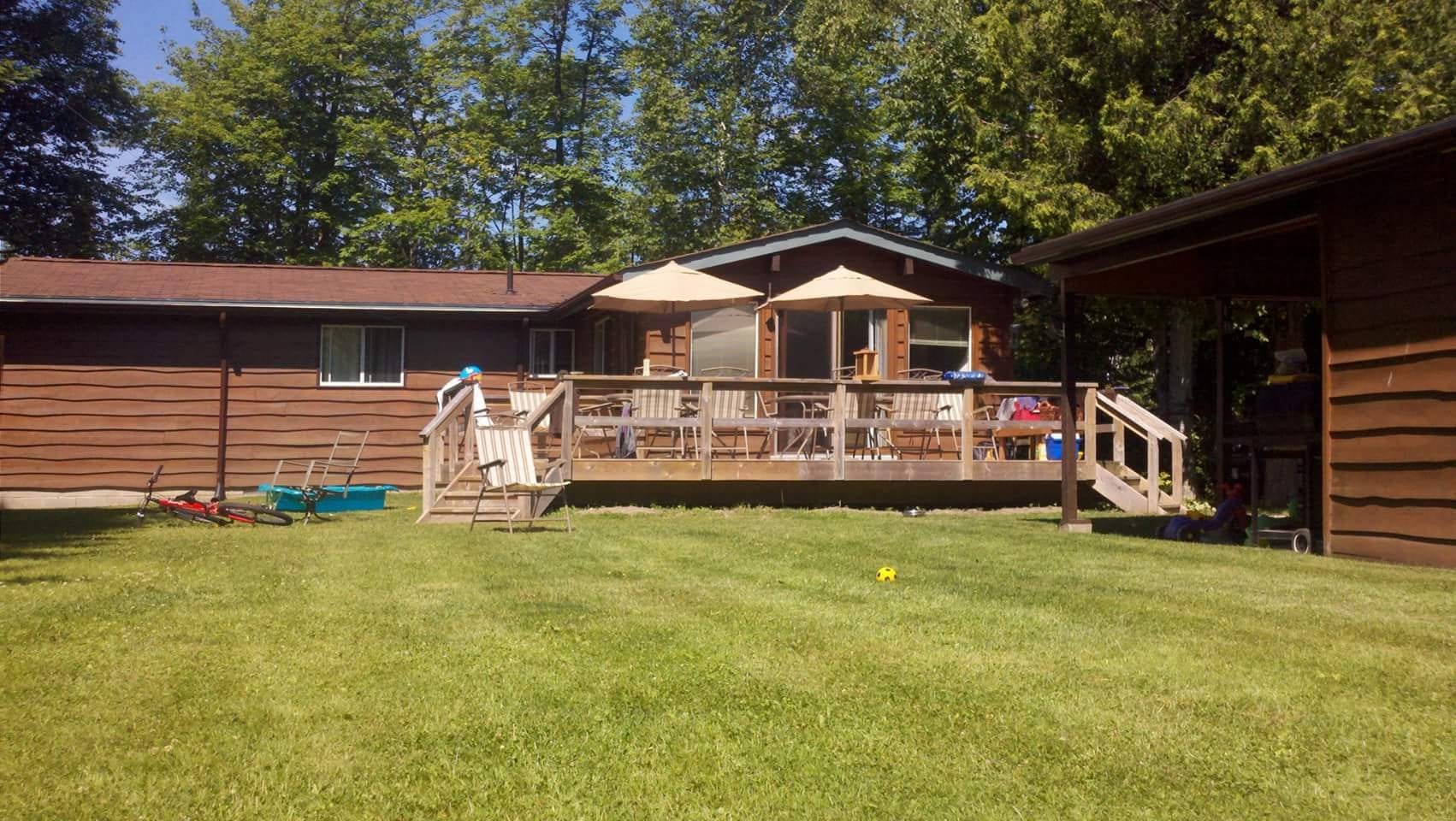
If you own a cottage or seasonal property, everything in this article applies to you twice. Your place sits empty for months. It's likely in a rural area with fewer neighbours watching. The nearest police detachment might be a 20-minute drive. Environmental risks are amplified because the property isn't maintained year-round. And when something goes wrong in January, you might not know about it until May.
Cottage security isn't just about catching someone breaking in. It's about knowing when:
- Indoor temperature drops below freezing and your pipes are at risk
- Water is pooling where it shouldn't be, from a leak, a burst pipe, or spring runoff through a crack
- Power goes out and stays out, silently shutting down heat, sump pumps, and everything else
- Motion is detected on the property during a week when nobody should be there
- Someone approaches the entrance, whether it's a delivery driver or someone casing the property
All of that information goes straight to your phone. You don't need to drive up to check. You don't need to ask a neighbour to swing by. You see what's happening in real time and get alerted the moment something isn't right.
Opening your cottage this spring? Get a security system installed before you turn the water back on. A Force Security technician can set up a full vacation home security system in a single visit. PowerG+ wireless means no cables to run. Protection starts the same day.
This Happens in the Communities We Serve
This isn't a theoretical risk from a security industry brochure. These are real break-in patterns from the neighbourhoods where Force Security installs systems.
On Hamilton Mountain, suspects rang doorbells to confirm nobody was home before kicking in doors. In Toronto's Queen West, it was security camera footage that identified the suspects and led to the investigation. York Region's Project Dora took down organized break-and-enter crews targeting residential properties across the suburbs.
In every case, the pattern was the same. The homes without cameras and monitoring were the ones that got hit. The ones with visible security were either avoided entirely or provided the evidence that led to arrests. The Toronto crime data and Hamilton safety survey both confirm it. Break and enter is one of the most common property crimes in Ontario. And it concentrates on the easiest targets.
Now imagine those same houses sitting empty for a week. No alarm. No cameras. No one watching. That's the scenario vacation home security is designed to prevent.
Local Protection Since 1988
Force Security has been protecting homes and businesses across Ontario for over 35 years. We're a local, family-owned company. Our technicians live in the same communities they protect. When you call, you get a real person who knows your area and your system.
- Real people answering the phone. No automated menus, no offshore call centres.
- No long-term contracts. We keep your business by doing good work, not by locking you in.
- No cost upfront options to get a full system installed without a big out-of-pocket expense.
- Every install done by our own certified local technicians. No subcontractors.
- ULC-listed monitoring with direct dispatch to police and fire.
- PowerG+ wireless technology for the most reliable, interference-free panels on the market.
- Specialized vacation home and cottage security packages with environmental monitoring built in.
Read our customer reviews, see our Readers' Choice Award, or meet the team.
Get a Free Vacation Home Security Assessment
Tell us about your property. We'll find the weak spots, recommend the right sensors and cameras, and build a system that keeps your home or cottage protected while you're away. No pressure, no obligation.
Book Your Free AssessmentGet Your Free Quote
Tell us about your property and we'll put together a customized recommendation.
By submitting, you agree to be contacted by Force Security about your request.
Frequently Asked Questions
Can I monitor my vacation home or cottage from my phone?
Yes. Force Security's vacation home systems include full remote access through a mobile app. View live camera feeds, check sensor status, arm or disarm the alarm, control smart locks, and receive real-time push notifications. It works from anywhere you have an internet connection.
What happens if my alarm goes off while I'm on vacation?
The monitoring centre handles it. A trained operator verifies the event and dispatches police or fire to your address. You get a notification, but the response doesn't depend on you seeing it. Your monitoring station acts on your behalf 24/7, 365 days a year.
Do I need internet at my cottage for a security system?
The alarm system communicates over cellular, so it works without a home internet connection. For live camera feeds and app-based features, internet is recommended. Force Security can assess your cottage's connectivity and design the best setup. Many rural cottages work well with cellular-only configurations for alarms and environmental sensors.
Will freeze alerts actually prevent pipe damage?
Freeze alerts notify you the instant indoor temperatures drop below your set threshold. That gives you time to act. Call a neighbour. Adjust the thermostat remotely. Send someone to the property. The alert won't fix a dead furnace, but it gives you hours of warning instead of discovering frozen, burst pipes weeks later. That warning window is the difference between a thermostat adjustment and a five-figure repair bill.
How quickly can a vacation home security system be installed?
Most installations are completed in a single visit. PowerG+ wireless technology means no drilling through walls or running cables. Sensors, cameras, smart locks, and the panel go in the same day. Your property is protected before the technician leaves. Book your free assessment now before the busy summer season fills up the schedule.
Proudly serving: Niagara Falls • St. Catharines • Welland • Fort Erie • Port Colborne • Fonthill • Lincoln • Beamsville • Crystal Beach • Hamilton • Ancaster • Binbrook • Smithville • Dunnville • Burlington • Mississauga • Brampton • Oakville • Ajax • Toronto • Brantford • Guelph • Kitchener • Port Dover • Acton • Aldershot